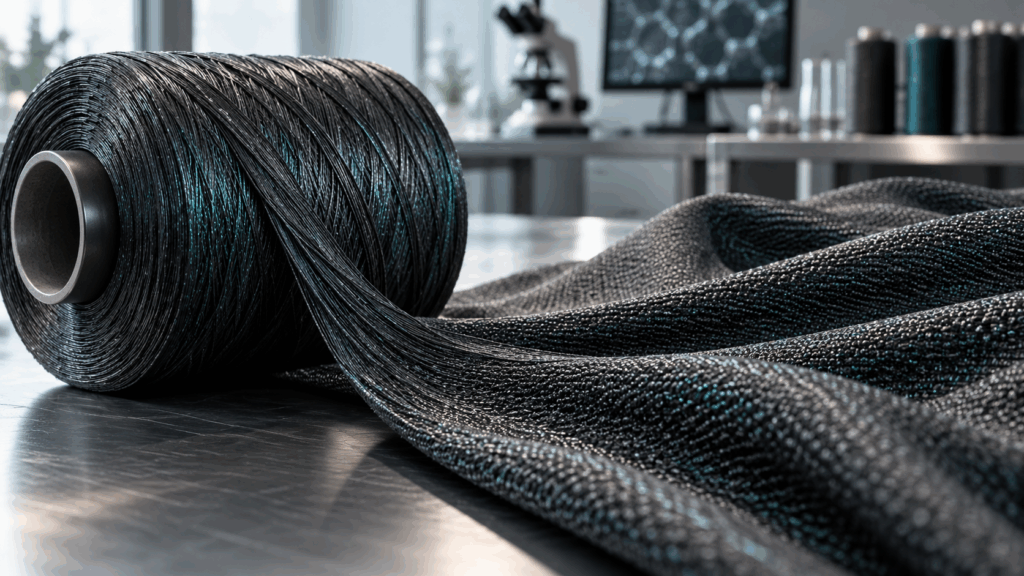
Smart textiles are changing what fabrics can do. Beyond providing comfort and protection, a textile can become part of a sensing system, help dissipate static charge, or serve as a component in a wearable heating design.
For product developers, the challenge is finding a material that can add electrical functionality while fitting into a practical textile manufacturing process. Graphene conductive yarn is one option worth exploring: it combines a textile yarn structure with graphene-based materials to support conductive or antistatic applications.
But how does it work, where can it be used, and what should manufacturers consider before selecting it? This guide covers the key questions.
What Is Graphene Conductive Yarn?
Graphene conductive yarn is a textile yarn designed to provide electrical functionality through the incorporation of graphene-based material. Depending on the product and manufacturing process, the graphene material may be integrated into a polymer fiber or applied as part of a functional treatment.
The yarn can be used in a fabric structure through processes such as knitting or weaving. Potential base materials include polyester and nylon, each selected according to the intended fabric properties and processing requirements.
LEVSON’s graphene smart textile solutions include conductive yarns, filament yarns and staple fibers for different textile development routes. The suitable material depends on the application: a yarn intended for static control, for example, may have different performance requirements from one used in a wearable sensor.
How Does Graphene Conductive Yarn Work?
Graphene-based materials can contribute to a conductive network within or on a textile fiber. When this network provides a suitable electrical path, the yarn may conduct current or help dissipate static charge.
Actual performance depends on more than the presence of graphene. Important factors include the type and amount of graphene-based material, how it is dispersed or applied, fiber composition, fabric construction, connections, and exposure to stretching, washing and wear.
A conductive yarn is best assessed as part of the finished textile system. A promising yarn sample does not automatically guarantee that a completed garment will meet its electrical or durability targets.
Where Can Graphene Conductive Yarn Be Used?
1. Smart Clothing and Wearable Electronics
Smart garments may use conductive pathways to connect textile components with electronic modules. Depending on the design, conductive yarn can be incorporated into a fabric to support signal transmission or other electrical functions.
Potential applications include interactive apparel, connected accessories and prototype wearable systems. Developers should evaluate how yarn resistance changes when the fabric bends or stretches, as well as how reliably the yarn connects to electronic components.
2. Wearable Sensors
Conductive textiles can be developed as part of sensors that respond to movement or other physical changes. For example, a conductive fabric structure may be investigated for tracking bending or body motion.
Sensor performance depends on the complete design, including the conductive material, fabric geometry, electronics and signal processing. Teams should test sensitivity, repeatability and performance after repeated movement before making claims about accuracy.
3. Antistatic Workwear and Industrial Fabrics
Static charge can be a concern in certain manufacturing and handling environments. Conductive or static-dissipative yarns may be incorporated into fabrics intended to help control charge accumulation.
The required performance depends on the workplace, garment design and applicable standards. Material selection alone is not enough: the finished fabric or garment should be tested under the conditions relevant to its intended use.
4. Heated Textiles
Graphene conductive yarn may also be considered for textile heating designs. When current passes through a resistive conductive path, electrical energy is converted into heat.
Examples of potential products include heated garments, cushions and textile heating pads. The yarn’s resistance, the layout of the heating area, the power supply and the control system all affect the result. Temperature distribution, electrical connections and protection against overheating should be evaluated in the finished product.
Graphene Conductive Yarn vs. Conventional Conductive Options
Graphene-based yarn is one of several routes for adding conductivity to textiles. Other approaches include metal fibers, metal-coated yarns and conductive coatings.
- Graphene-based conductive yarn: Can be integrated into textile yarn structures; evaluate resistance, consistency and performance after use.
- Metal fiber yarn: An established route for conductive fabrics; evaluate fabric feel, flexibility and processing compatibility.
- Metal-coated yarn: Can provide a conductive surface; evaluate coating durability during abrasion and washing.
- Conductive fabric coating: Can add functionality to selected areas; evaluate adhesion, flexibility and changes to fabric feel.
No material is the best choice for every application. Compare options using the same finished-product requirements and test conditions, including comfort, electrical performance, manufacturing compatibility and cost.
How to Choose Graphene Conductive Yarn for Your Project
Define the Function First
Start by identifying what the yarn needs to do. Is the goal to dissipate static charge, carry a signal, form part of a sensor or generate heat? These functions call for different electrical properties. Specify a measurable target and test method whenever possible, rather than describing the requirement only as “high conductivity.”
Check Electrical Resistance in the Intended Structure
Ask for resistance data and how it was measured. Yarn length, fabric construction, contact points and test conditions can all affect results. For a smart garment, consider testing both the yarn and the finished conductive path. Connections and seams can introduce resistance or variability that a yarn-only measurement does not capture.
Match the Yarn to the Textile Process
Consider whether the material is compatible with your knitting, weaving or other intended process. Yarn size, strength, flexibility and fabric construction can influence processing and final appearance.
LEVSON offers graphene conductive polyester filament yarn for applications including conductive textiles and wearable heating concepts. Product specifications and suitability should be confirmed for the intended project.
Test Durability Under Realistic Conditions
A wearable textile may experience repeated bending, stretching, abrasion, sweat exposure and laundering. Evaluate electrical performance before and after the relevant durability tests.
For early development, a useful comparison is to record resistance at the start of testing and after each selected wear or wash cycle. The acceptance limits should reflect the needs of the finished product.
Consider Comfort and Integration
Electrical performance matters, but so do fabric softness, weight, appearance and comfort. A conductive path must also be integrated with connectors, power sources or electronics in a way that suits the product’s intended use. Prototype the complete assembly early enough to identify issues with seams, contact points and component placement.
Frequently Asked Questions
Is every graphene yarn electrically conductive?
No. A yarn containing graphene-based material is not necessarily designed to provide the conductivity required for a particular application. Ask the supplier for measured electrical properties and test the material in your intended fabric structure.
Can graphene conductive yarn be washed?
Washability depends on the yarn, fabric construction, connections and care conditions. For a wearable product, test the finished assembly using the intended washing procedure and assess electrical performance afterward.
Can graphene conductive yarn be used for heated clothing?
It can be considered as a component in a heated textile design. Suitability depends on resistance, power supply, heating layout, temperature control and finished-product testing.
What information should I provide when requesting a sample?
Share the intended application, target electrical performance, fabric construction, processing method and expected conditions of use. If possible, include requirements for washing, stretching, temperature and production volume.
Develop Your Graphene Smart Textile Project with LEVSON
Selecting a conductive yarn starts with understanding the intended function and how the material will be integrated into the final textile.
LEVSON supports textile developers, brands and manufacturing partners with application discussions, material recommendations and sample evaluation. Explore the graphene smart textile solutions page to discuss your project requirements.